Your Bar, Your Rules: How to Craft a Signature House Cocktail That's Totally You
Your Bar, Your Rules: How to Craft a Signature House Cocktail That's Totally You
Think about the last time you walked into a bar that handed you a little card with their featured drink on it. Maybe it was a smoky mezcal sour with a name that made you smile, or a citrusy gin fizz dressed up with a sprig of rosemary. Whatever it was, it told you something about that place — its personality, its vibe, its point of view.
Now imagine your home bar having that same energy.
A signature house cocktail isn't just a drink. It's a statement. It's the thing guests talk about on the drive home. It's the recipe your friends text you about two weeks later. And honestly? It's one of the most fun parts of building out a home bar that actually feels like yours.
Here's how to make it happen.
Start With What You Already Love
The biggest mistake people make when trying to create an original cocktail is reaching too far outside their comfort zone right out of the gate. The better move? Start with a base spirit you genuinely enjoy drinking.
If you always reach for bourbon on a Friday night, let bourbon lead the way. If you've been on a tequila kick since your last trip to Austin, start there. Your enthusiasm for the spirit will come through in how you talk about the drink — and that matters more than you'd think when you're playing host.
Once you've locked in your base, think about the flavor profile you're drawn to. Are you a bitter-forward person who loves a Negroni? Do you lean toward bright, citrusy drinks? Are you all about something low-key and spirit-forward? Getting honest about your preferences here is what separates a cocktail you're proud of from one that just tastes like "a drink."
Build Around a Flavor Framework
Every well-balanced cocktail hits a few key notes: something strong (your spirit), something sweet, something sour or bitter, and something that ties it all together — whether that's a modifier, a garnish, or an unexpected ingredient.
A solid starting framework looks something like this:
- 2 oz base spirit
- ¾ oz sweetener (simple syrup, honey syrup, flavored syrup, liqueur)
- ¾ oz acid (fresh citrus juice, shrub, or a dry vermouth if you're going spirit-forward)
- Accent ingredient (bitters, a rinse, an herbal element, or a flavored salt rim)
This isn't a rigid formula — it's a launchpad. From here, you start adjusting. Maybe you swap the lemon juice for grapefruit and find it opens up the whole thing. Maybe you add a few dashes of mole bitters and suddenly the drink has a smoky depth that wasn't there before. That's the process. Taste, adjust, taste again.
One practical tip: keep a small notebook nearby while you're experimenting. Jot down every variation you try, even the ones that didn't work. You'll thank yourself later when you're trying to remember what ratio hit just right.
Let the Season or Your Story Inspire It
The best signature cocktails have a reason behind them — a story that makes them more interesting to serve and more memorable to drink.
Maybe your house cocktail is built around a bottle you brought back from a distillery visit in Kentucky. Maybe it uses a syrup you make from scratch with the Meyer lemons your neighbor always drops off. Maybe it's a riff on a drink your dad used to make, updated with better ingredients and a little more finesse.
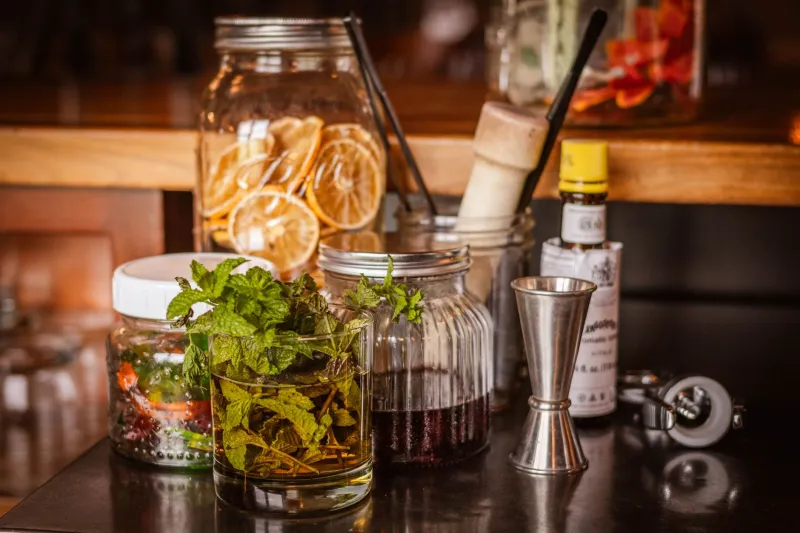
Seasonal inspiration works great here too. A summer house cocktail might lean on fresh cucumber and lime. A fall version could bring in apple cider and cardamom. Having a cocktail that changes with the seasons keeps things fresh and gives you a reason to keep refining.
Name It Something Worth Remembering
This part is genuinely fun. Your house cocktail needs a name — something that fits its personality and gives guests something to ask for.
Good cocktail names tend to do one of a few things: they reference a place ("The Highland Park," "The Sunset Strip"), they hint at the flavor profile ("Smoke & Honey," "The Velvet Sour"), or they carry a personal story ("The Uncle Sal," "Grandma's Garden"). Avoid anything too generic or too try-hard. The best names are the ones that make people curious enough to ask about it.
Once you've landed on a name, write it down somewhere official — a card you set out at parties, a chalkboard behind your bar cart, or even just a saved note on your phone that you pull up when someone asks for the recipe.
Refine It Through Real-World Testing
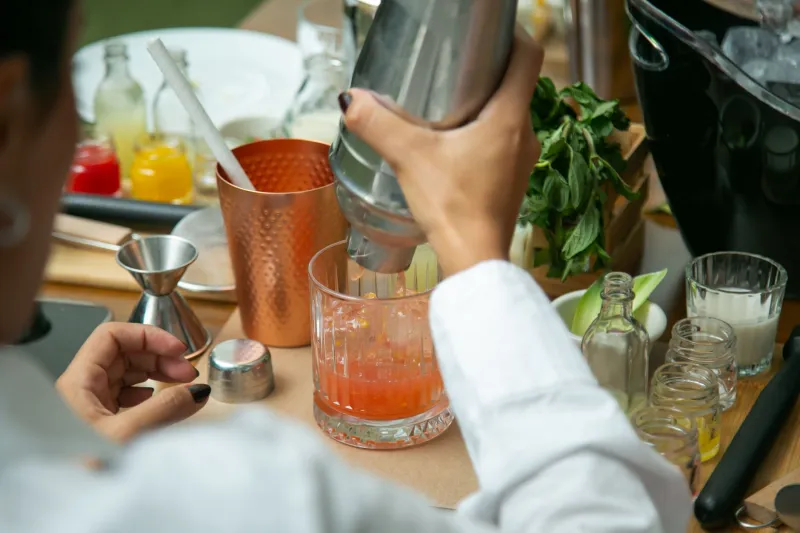
Here's the thing about developing a house cocktail: it usually takes a few rounds of real feedback before it's truly dialed in. Make it for friends. Watch their faces when they take the first sip. Ask them what they'd change — more sweetness? A little more acid? Something missing on the finish?
You don't have to take every piece of feedback as gospel, but patterns are useful. If three different people say it tastes a little flat, there's probably something to that. If everyone keeps asking for a second, you're onto something.
Also, don't be afraid to let it evolve. Your signature cocktail doesn't have to be locked in forever. Some of the most iconic bar programs tweak their recipes quietly over time. The goal is a drink that keeps getting better, not one that's frozen in amber.
Scale It Up for a Crowd
Once your recipe is solid, you'll want to know how to batch it — because making individual cocktails for 12 people while also trying to have a conversation is nobody's idea of a good time.
Batching is straightforward for most cocktails. Multiply your recipe by the number of servings you need, combine everything except carbonated ingredients in a large pitcher or jar, and refrigerate it ahead of time. Add sparkling water, tonic, or soda right before serving so it doesn't go flat.
One thing to note: when batching spirit-forward cocktails that are normally stirred or shaken, you'll want to add a small amount of water (about 20–25% of the total volume) to account for the dilution that would normally happen during mixing. It makes a bigger difference than you'd expect.
For garnishes, prep them ahead and keep them in a small dish so guests can grab their own. It's a small detail that makes the whole experience feel more intentional.
The Bigger Picture
A signature house cocktail does something that no amount of premium spirits or fancy glassware can do on its own — it gives your home bar a personality. It turns a collection of bottles into a bar, and it turns hosting into something people genuinely look forward to.
And when someone walks in, takes their first sip, and says, "Okay, what is this?" — that's the moment you've been building toward.
So pick your spirit, start experimenting, and find your drink. Your house cocktail is out there waiting. You just have to mix your way to it.