Don't Let Your Bottles Down: The Home Bartender's Guide to Storing Spirits the Right Way
You spent real money on that bottle of single malt. You tracked down the small-batch bourbon everyone was talking about. You finally snagged a limited release amaro that your local shop only gets twice a year. And then you set it on a shelf next to a window, above the stove, or in a cabinet that swings between 60°F in winter and 85°F in summer — and you never thought about it again.
Here's the hard truth: spirits are more fragile than their alcohol content suggests. The conditions in which you store your bottles have a genuine, measurable impact on what ends up in your glass. Professionals know this. Distilleries know this. Most home bartenders, unfortunately, don't — and their pours pay the price.
Let's fix that.
Why Spirits Aren't As Indestructible As You Think
High-proof alcohol is a natural preservative, sure. But "preserved" and "unchanged" are two very different things. Once a bottle is opened, oxidation begins. Oxygen interacts with the volatile aromatic compounds that give your whiskey, rum, or gin its complexity, and over time, those compounds break down. Heat accelerates this process dramatically. A bottle stored at 75°F doesn't just age a little faster than one kept at 60°F — it can deteriorate noticeably within months.
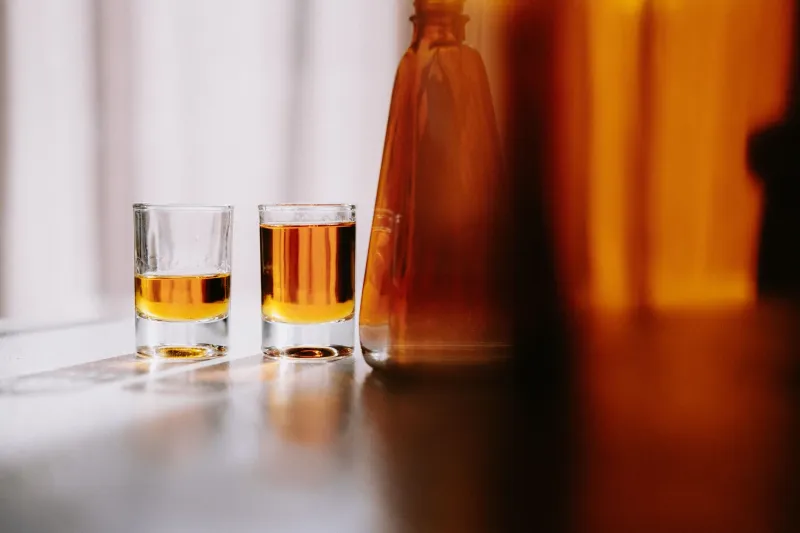
Light is another underestimated enemy. UV rays — from both sunlight and certain artificial sources — break down the delicate esters and congeners that define a spirit's character. That's not marketing language. That's chemistry. A bottle of fine Scotch left on a sunlit bar cart for a season will taste measurably flatter than one stored in a dark cabinet. The beautiful amber color of aged spirits is actually somewhat photosensitive, and prolonged UV exposure can dull it along with the flavor.
Humidity rounds out the trio of threats. Extreme dryness can cause corks to shrink and crack, letting in more oxygen than you'd want. Excessive moisture can promote cork mold and, in rare cases, seep past a compromised seal. Neither extreme is your friend.
The Enemies Hiding in Plain Sight
Before you can fix your storage situation, it helps to identify what's actually working against you in your specific home.
The kitchen bar cart: Kitchens are thermal chaos. Ovens, dishwashers, and stovetops create temperature swings throughout the day. If your spirits live anywhere near cooking activity, they're experiencing repeated heat cycles that are genuinely harmful to open bottles.
The south-facing shelf: Natural light is beautiful until it's destroying your vermouth. Any shelf that catches direct sun for even part of the day is a problem. South- and west-facing exposures are the worst offenders in most American homes.
The garage or basement bar: Garages can get brutally hot in summer and cold enough in winter to affect certain liqueurs. Basements are often better — cooler and more stable — but dampness can be an issue depending on where you live.
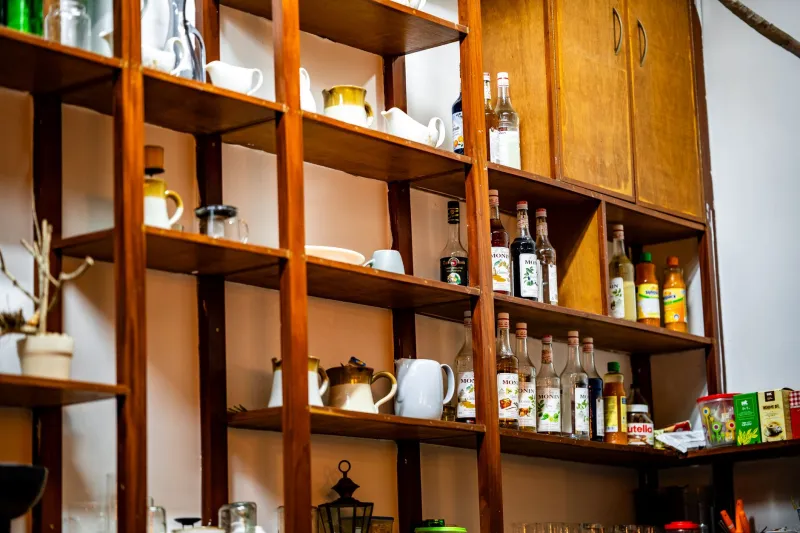
The decorative open bar cart: These look great in every interior design photo. They're also fully exposed to ambient light, temperature swings, and dust. If your bar cart is purely aesthetic, that's fine — just keep it stocked with bottles you'll finish quickly.
What Professional Storage Actually Looks Like
Bars and spirits retailers don't store their inventory the same way most of us store ours, and the gap is instructive. Climate-controlled spirits storage aims for a consistent temperature between 55°F and 65°F, low humidity around 50–70%, and zero direct light exposure. That's not wildly different from a good wine cellar — and for good reason.
You don't need a dedicated spirits cellar to get meaningfully closer to these standards at home. Here's a practical breakdown by setup:
If you have a basement: This is your best asset. Basements in most of the US maintain relatively stable, cool temperatures year-round. A dedicated shelf or cabinet down there — away from the water heater and any exterior walls prone to moisture — is genuinely excellent storage for bottles you're aging or not opening frequently. Invest in a small dehumidifier if your basement runs damp.
If you live in an apartment: Interior closets are your friend. A hall closet or pantry that doesn't share a wall with exterior sun exposure stays darker and more temperature-stable than most open living spaces. Consider a dedicated shelf or small cabinet inside a closet for your premium or rarely opened bottles.
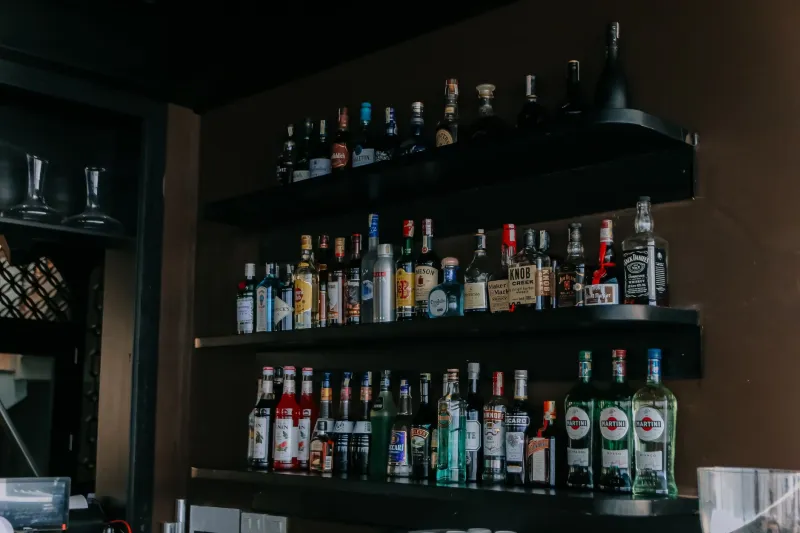
For your active bar setup: Keep the bottles you're using regularly at room temperature — that's fine. Just keep that active bar away from windows, heat sources, and direct overhead lighting. A dedicated bar cabinet with solid doors beats an open shelf every time.
The Open Bottle Problem
Partially consumed bottles are where storage conditions matter most. Once you've broken the seal, the clock starts. A bottle that's more than half empty has more surface area of spirit exposed to the oxygen in the headspace, and it degrades faster.
For bottles you're working through slowly — particularly vermouth, sherry-based spirits, or anything under 40% ABV — consider decanting the remaining spirit into a smaller bottle to reduce that headspace. It sounds fussy, but it genuinely works. Some serious home bartenders keep a collection of small glass bottles with tight stoppers specifically for this purpose.
For high-proof spirits (anything above 50% ABV), you have a bit more leeway. The alcohol itself inhibits oxidation to some degree. But "more leeway" doesn't mean "leave it next to the window indefinitely."
Cork vs. Screw Cap: Does It Matter for Storage?
Modern screw caps create an airtight seal that's arguably superior to natural cork for long-term storage. Cork has romance and tradition going for it, but it's also inconsistent — some corks compress beautifully and maintain a near-perfect seal for years; others dry out and allow slow oxygen infiltration.
If a bottle you store rarely has a cork, make a habit of checking it occasionally. A cork that's become brittle or crumbly should be replaced or the bottle moved to active use. Storing bottles on their sides (wine-style) can help keep corks moist, but it's not necessary for spirits the way it is for wine.
A Simple Audit to Start Today
Walk over to your current home bar setup and ask yourself four questions:
- Does direct sunlight hit any of these bottles during the day?
- Is this area near a heat source — oven, radiator, sunny exterior wall?
- Does the temperature in this space swing more than 15–20°F between seasons?
- Are any partially consumed bottles sitting with more air than spirit inside?
If you answered yes to any of these, you have actionable improvements to make. None of them require a major renovation. A cabinet with doors instead of open shelving, a relocated bar cart, a few small glass bottles for decanting — these are small investments that protect the much larger investment sitting in your bottles.
Your spirits deserve better than benign neglect. Store them right, and every pour will prove it.