The Secret Step Between Pouring and Sipping That Most Home Bartenders Rush Right Past
Here's a scenario that probably sounds familiar. You've put real thought into your home bar. The bottles are solid, the ice is fresh, and you followed the recipe to the letter. But when you take that first sip, something's missing — the drink tastes harsh, or weirdly thin, or just kind of flat in a way you can't quite name. You start second-guessing the spirit, the vermouth, maybe even the recipe itself.
Nine times out of ten, the bottle isn't the problem. The technique is.
Specifically, what's happening — or more accurately, what's not happening — during the mixing process. Proper dilution and temperature control through stirring and shaking are the most underestimated skills in home bartending. Nail them, and even a modest bottle punches above its weight. Ignore them, and a premium pour still lands flat.
Dilution Isn't a Dirty Word
Let's start by reframing something. A lot of home mixologists treat water in a cocktail like an accident — something that sneaks in when the ice melts too long. But professional bartenders think about dilution as an essential ingredient, right alongside the spirits and modifiers.
When you shake or stir a cocktail with ice, you're doing two things simultaneously: chilling the drink and introducing a controlled amount of water into the mix. That water isn't ruining anything. It's softening the alcohol's sharp edges, helping flavors bloom, and bringing the whole drink into balance. A Manhattan with zero dilution would taste like a mouthful of cold whiskey with a faint hint of vermouth. Add the right amount of water through proper mixing, and suddenly you're tasting caramel, dried fruit, and bitters in harmony.
The goal isn't to water things down. It's to hit the sweet spot where the drink is cold, slightly diluted, and fully integrated — and that takes more intention than most people realize.
Stirred vs. Shaken: It's Not Just a James Bond Thing
The choice between stirring and shaking isn't arbitrary, and it's not really about personal preference. It's about what the cocktail needs.
Stirred cocktails — your Manhattans, Negronis, martinis, and Old Fashioneds — are built entirely from spirits and spirit-forward ingredients. They're meant to be silky, clear, and unified. Stirring keeps the texture smooth and the appearance pristine. When you stir, you're gently chilling and diluting without incorporating air or breaking down the liquid's surface tension. The result is a cocktail that feels almost velvety on the palate.
Shaken cocktails are a different animal. Any drink with citrus juice, egg whites, cream, or other non-spirit ingredients gets shaken — think daiquiris, margaritas, whiskey sours, and gimlets. Shaking does something stirring can't: it aggressively aerates the drink, creating a slightly frothy, lighter texture that suits these brighter, more acidic recipes. The cloudiness you see in a freshly shaken daiquiri? That's tiny air bubbles, and it actually contributes to the mouthfeel in a good way.
The problem happens when home bartenders reverse the logic — shaking a stirred drink because it feels more exciting, or barely stirring something that needed a real shake. Shaking a spirit-only cocktail like a Negroni chips the ice, dilutes unevenly, and leaves you with a cloudy, slightly watered-down drink. Giving a citrus cocktail a lazy ten-second stir means it never fully chills or integrates, and you'll taste exactly that.
How Long Is Long Enough?
This is where most people are cutting corners without knowing it. The standard advice — stir for about 30 seconds, shake for 10 to 15 seconds — exists for a reason, but it's also not gospel. What you're actually chasing is a target temperature around 23°F to 28°F, with about 25% dilution by volume.
You don't need a thermometer to get there. You need to pay attention.
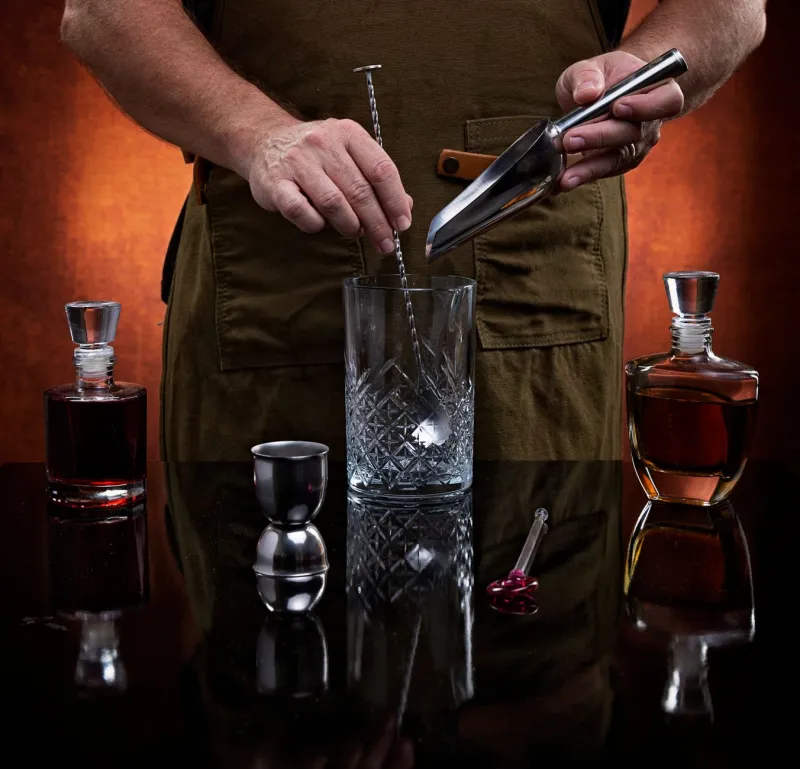
For stirring, thirty full rotations with a bar spoon in a mixing glass packed with ice is a reasonable baseline. The outside of the mixing glass should feel uncomfortably cold to the touch — almost painfully so. If it just feels cool, you haven't stirred long enough. Technique matters here too: hold the spoon between your fingers and rotate it around the inside of the glass in a smooth, continuous motion. You're not stirring a pot of soup. The spoon should glide, not churn.
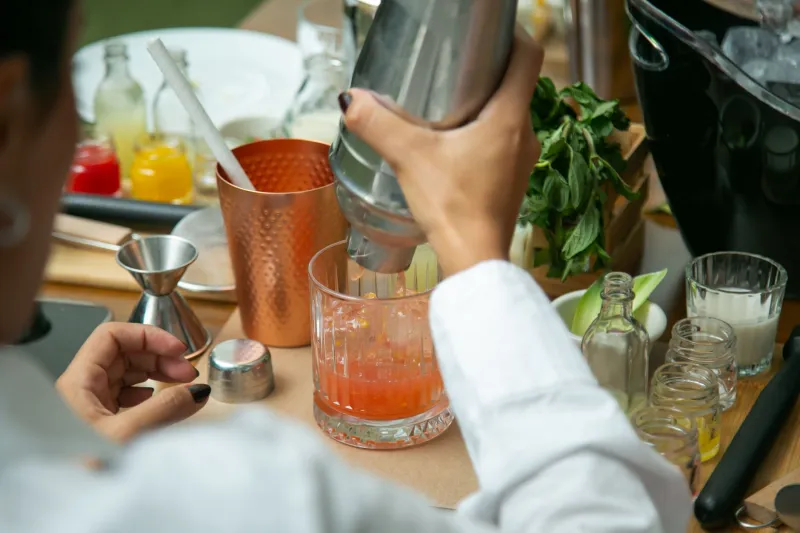
For shaking, commit to a full, vigorous shake for at least 12 to 15 seconds. You'll hear the ice break down and the sound of the shaker will change slightly as the liquid thickens and chills. When the outside of your shaker tins are frosted and nearly painful to hold, you're in the right zone. A weak, polite shake that lasts five seconds is one of the most common reasons home cocktails taste underperformed.
The Ice Factor
Your ice matters more than you might think, and it interacts directly with your technique. Large, dense ice cubes — the kind you'd make in a silicone mold — melt more slowly, which gives you more control during stirring. They're ideal for spirit-forward drinks where you want gradual, even dilution.
For shaking, smaller or cracked ice actually works better because it chills the drink faster and more aggressively. The trade-off is that it dilutes faster too, which is why shaking time matters — you want to stop before you've overdone it.
Whatever you do, skip the hollow, crescent-shaped cubes from a standard refrigerator ice maker for your mixing vessel. They melt fast, dilute unevenly, and make it harder to hit that ideal temperature window.
Why This Changes Everything
Here's the thing about technique: it's invisible until you understand it. Once you start paying attention to how long you're stirring, how hard you're shaking, and what the ice is actually doing in your mixing glass, your cocktails will shift in a way that's hard to describe but immediately obvious in the glass.
That harsh edge on your Manhattan? It'll smooth out. The citrus in your margarita that always seemed a little aggressive? It'll settle into balance. The drink that used to taste like the sum of its parts will start tasting like something more — something cohesive.
The bottles on your shelf are doing their job. Give your technique a chance to catch up, and you'll finally taste what they were always capable of delivering.