What's Actually on That Label: A No-Nonsense Guide to Buying Spirits With Confidence
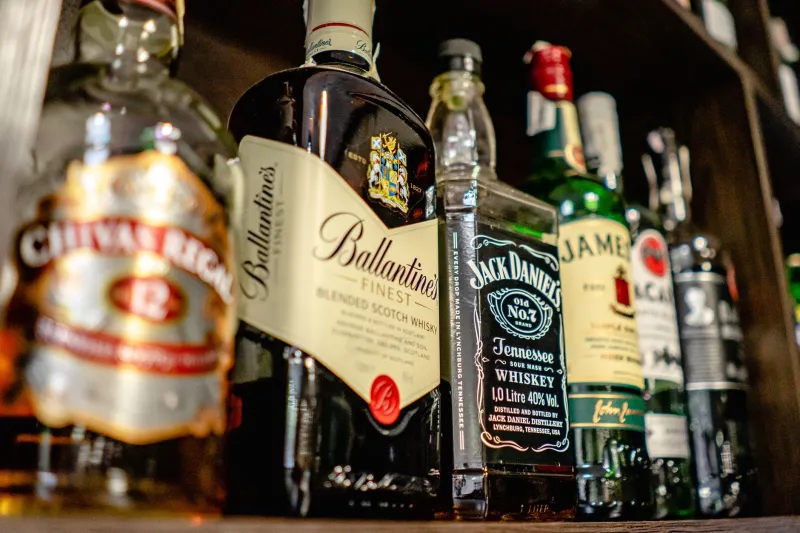
Stand in the whiskey aisle of a good liquor store for five minutes and you'll be surrounded by more language than you can process. Small batch. Single barrel. Handcrafted. Double distilled. Aged in American white oak. Bottled at the source. Estate grown. It's a lot — and most of it is designed to make you feel like you're making an informed choice when you might not be.
The good news: once you know what actually matters on a spirit label versus what's pure atmosphere, you become a genuinely better shopper. You stop paying a premium for aesthetic packaging and start paying for real quality markers. You pick up bottles that punch above their price point and leave behind the ones that are coasting on reputation.
Here's your field guide.
Start With Proof — It's More Than Just Strength
In the US, proof is simply twice the ABV percentage. A bottle labeled 80 proof is 40% alcohol by volume. That math is easy enough. But what proof tells you beyond raw strength is actually meaningful.
Higher proof spirits tend to carry more flavor compounds — congeners, esters, and oils that would be diluted out at lower proofs. A bourbon bottled at 115 proof isn't just stronger than an 80-proof version; it often has more concentrated, complex flavors. That's why barrel-proof and cask-strength releases command both higher prices and genuine enthusiasm from serious drinkers.
Lower proof isn't automatically a negative, though. Some spirits are designed to be approachable at 40%, and diluting to a consistent proof is a legitimate production choice. What you want to watch for is a producer who's brought proof down primarily to increase yield — essentially selling you more water at the same price. When a spirit tastes thin and flat at 40% with no apparent reason for the lightness, that's often the culprit.
The practical takeaway: For whiskey especially, seek out bottles in the 90–110 proof range when you want maximum cocktail impact and flavor integrity. Reserve lower-proof bottles for sipping neat when softness is the point.
Age Statements: What They Guarantee and What They Don't
An age statement tells you the minimum time the youngest spirit in the bottle spent in a barrel. That's it. A 12-year Scotch may contain whisky that's been aged 12 years, 15 years, and 20 years — or it may be almost entirely 12-year whisky. You can't know from the label alone.
In the US, bourbon and rye regulations require that age statements reflect the youngest whiskey in the blend. For Scotch, the same rule applies. This makes age statements a floor, not an average.
More importantly, age is not synonymous with quality. Whisky aged in a hot Kentucky warehouse matures faster than Scotch aged in cool Scottish conditions. A 4-year Kentucky bourbon can be more complex than a 10-year Scotch — because the climate, the wood, and the distillate itself all interact differently. Age statements are one data point, not a scorecard.
Watch out for: "No age statement" (NAS) bottles. These have become more common as aged stock runs short across the industry. NAS isn't automatically inferior — some NAS releases are genuinely excellent. But it's a reason to read the rest of the label more carefully and, ideally, taste before committing to a case.
"Small Batch" and "Single Barrel" — One Means Something, One Doesn't
This is where marketing language does its most effective work.
"Single barrel" has a real, specific meaning: the contents of this bottle came from one individual barrel. Every barrel is slightly different — different char level, different position in the warehouse, different wood grain — so single-barrel releases have genuine individuality. If you find one you love, the next barrel release may taste noticeably different. That's not a flaw; it's the point.
"Small batch," on the other hand, is legally undefined in the United States. It can mean a producer blended 6 barrels. It can also mean they blended 600. There's no regulatory floor. Some producers use it meaningfully — they're genuinely batching small quantities with careful selection. Others use it because it sounds artisanal. Your job is to figure out which you're looking at, usually by researching the producer rather than trusting the label alone.
Practical move: When you see "small batch," look up what that producer actually means by it. Many craft distilleries and even some major producers publish their batching philosophy. If they don't, treat the term as decoration.
Reading Production Method Claims
Terms like "pot still," "column still," "double distilled," and "copper pot" tell you something about how the spirit was made — and that does affect flavor.
Pot still distillation is slower, less efficient, and retains more of the raw material's character. Irish pot still whiskey, for example, has a richness and oiliness that comes directly from this process. Column still distillation is cleaner and more neutral — it's how most vodka and lighter whiskeys are made.
"Double distilled" simply means the spirit went through the still twice — common for many whiskeys and some rums. "Triple distilled" is a marketing point that Irish distillers lean on; it generally produces a smoother, lighter spirit, though not necessarily a more complex one.
For rum and tequila especially, production method matters enormously. "100% agave" on a tequila label is a genuine quality floor — anything without it contains at least some non-agave sugars. "Pot still rum" signals a different, often more characterful product than column-distilled rum.
The Fine Print Worth Reading
A few label details that many shoppers skip but shouldn't:
"Bottled in Bond": A US legal designation that means the spirit is at least 4 years old, bottled at exactly 100 proof, and produced at a single distillery in a single distilling season. It's one of the most consumer-protective labels in American spirits, and bottles carrying it are almost always worth their price.
"Distilled by" vs. "Produced by" vs. "Bottled by": These are different. "Distilled by" means they actually made it. "Produced by" can mean they supervised production elsewhere. "Bottled by" often means they bought bulk spirit and put it in their bottle. None of these is automatically bad — some of the best American whiskeys are sourced — but knowing the distinction helps you understand what you're paying for.
Coloring and additive disclosures: Most spirits don't have to disclose added caramel coloring or flavor additives in the US. Scotch regulations require disclosure of caramel coloring (listed as E150a). If a spirit looks unusually dark for its age, that's worth noting.
Building Your Label-Reading Habit
None of this requires memorizing a textbook. The next time you're at the liquor store, just slow down for sixty seconds with a bottle you're considering. Check the proof. Look for an age statement. Find out who actually distilled it. Read any production method claims critically.
You'll start to notice patterns quickly. You'll recognize which terms carry real weight and which ones are set dressing. And you'll spend your money on bottles that genuinely deliver — not ones that just look the part on a shelf.
That's not a small thing. Over a year of home bar purchases, that kind of informed shopping makes a real difference in both your bar quality and your budget. Read the label. Know what it means. Pour better.