Two Ingredients, Zero Shortcuts: The Japanese Art of the Perfect Highball
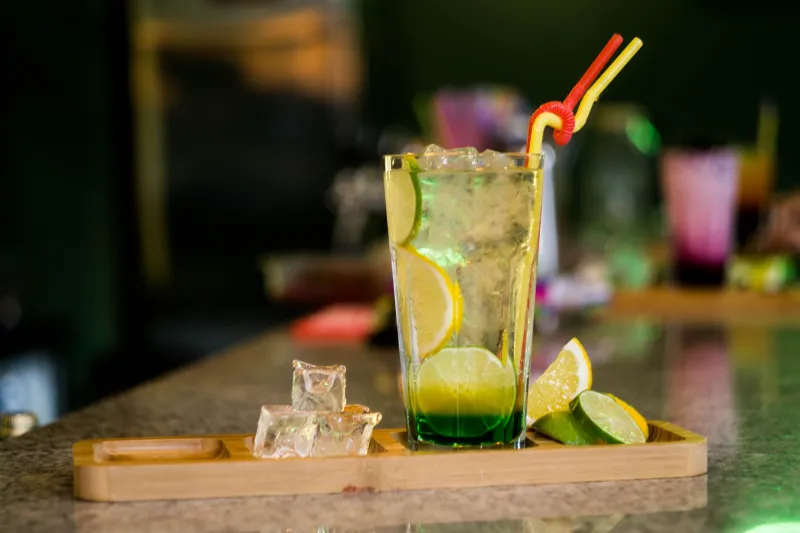
There's a bar in Tokyo where the bartender spends twenty minutes preparing a single highball. He carves the ice by hand, chills the glass in a freezer, measures his whisky to the milliliter, and pours the soda water down the back of a spoon so it barely disturbs the surface. The result is a drink that costs the equivalent of thirty dollars and sells out every night.
Now, nobody's saying you need to go that far in your living room. But the Japanese approach to the highball carries a lesson that every home bartender — whether you're just starting out or deep into your craft cocktail era — genuinely needs to hear: the simplest drinks have nowhere to hide.
When there are only two ingredients in the glass, everything matters. The ratio. The temperature. The carbonation. The pour. Get those right, and the highball stops being a lazy Tuesday drink and starts being the most elegant thing on your home bar menu.
Why Japan Took the Highball Seriously (and Why We Should Too)
The highball isn't a Japanese invention. It's been a staple of British pubs and American rail cars for well over a century. But somewhere along the way, Japan adopted it, obsessed over it, and quietly elevated it into something close to an art form.
The story goes that Japanese whisky sales were tanking in the 1990s and early 2000s. Suntory launched a campaign to revive interest by rebranding the highball — called haibooru in Japanese — as a cool, food-friendly drink for a new generation. They trained bartenders on precise technique, standardized the glassware, and made the whole ritual feel intentional rather than casual.
It worked spectacularly. And in the process, they proved something universally true: when you treat a simple drink with respect, people can taste the difference.
For American home bartenders, that's a genuinely exciting idea. You don't need a back bar full of rare bottles or a collection of exotic liqueurs to impress guests. You need one great spirit, excellent sparkling water, and the discipline to execute cleanly.
The Ratio That Changes Everything
Most American highball drinkers default to a heavy-handed pour — two ounces of spirit, fill the rest with soda. It works, but it's not refined. The Japanese standard leans closer to a 1:3 or even 1:4 ratio of spirit to mixer, which sounds like it's watering down your drink until you actually try it.
At that ratio, the spirit opens up. The carbonation lifts the aromatics. You get more nuance from the whisky — or whatever you're pouring — because it's not fighting the bubbles, it's dancing with them. The drink also stays colder longer without going flat, which matters more than you'd think across a two-hour dinner party.
Start at 1.5 ounces of spirit to 4.5 ounces of sparkling water and adjust from there. You'll find your sweet spot quickly.
Ice Is Not Optional — It's Architecture
If you've read anything on this site before, you already know that ice is a legitimate cocktail ingredient. In a highball, it's arguably the ingredient holding everything together.
The goal is a single large piece of ice — ideally a tall column or a spear cut to fit your glass — that chills the drink without melting fast enough to dilute it. Crushed ice or small cubes turn your highball into a watery mess within five minutes. Large-format ice keeps the temperature stable and the carbonation intact.
If you've invested in a large silicone ice mold (and if you haven't, it's worth the fifteen dollars), you're already halfway there. Freeze filtered water for the clearest results. Before adding anything to the glass, stir the ice once with a bar spoon to pre-chill the vessel and knock off any surface frost that could trap carbonation.
The Pour Matters More Than You Think
Here's where most people lose the plot. You've got great whisky, great ice, great sparkling water — and then you dump the soda in like you're filling a cup at a fast food joint. The bubbles blow out, the carbonation drops, and your careful ratio means nothing because the drink is already going flat.
Pour the spirit first, over the ice. Stir gently — just two or three rotations — to chill and slightly dilute. Then tilt the glass at a 45-degree angle and pour the sparkling water slowly down the inside edge. The goal is to disturb the liquid as little as possible. Some bartenders use the back of a bar spoon as a deflector. Either way, you're trying to preserve every bubble you can.
Once the soda is in, one single stir. That's it. Then drink it immediately.
Beyond Whisky: Spirit-and-Mixer Pairings Worth Exploring
The whisky highball is the classic, and it's a great place to start — Suntory Toki is widely available in the US and was basically designed for this application. But the format is endlessly adaptable, and half the fun is experimenting.
Gin and tonic water is technically a highball, and applying this same careful technique to your G&T will make you wonder why you ever made it any other way. Go with a London dry gin and a premium tonic like Fever-Tree or Q Mixers.
Rum and soda water is criminally underrated. A lightly aged rum — Plantation 3 Stars or Flor de Caña 4-year — with plain sparkling water and a lime wheel is clean, complex, and endlessly refreshing.
Mezcal and grapefruit soda plays on the Paloma template but in highball form. The smoke from the mezcal cuts through the sweetness beautifully. Jarritos Toronja works well here if you want something a little more casual.
Bourbon and ginger beer is the Kentucky Mule in highball clothing. Less fussy than building it over crushed ice in a copper mug, and honestly just as good when the bourbon is quality.
Aperol and prosecco — yes, the Spritz counts — follows these same principles. Ratio, temperature, and carbonation preservation make it a completely different experience than dumping it over ice and hoping for the best.
The Glassware That Completes the Ritual
The traditional Japanese highball glass is tall, thin, and elegant — closer to a Collins glass than a rocks glass, but often thinner-walled and slightly tapered. You don't need to import one, but the shape matters because it keeps the drink cold and preserves the carbonation column.
If you've got a standard Collins glass, you're fine. If you want to lean into the aesthetic, a set of Japanese-style highball glasses runs about $30-$40 on Amazon and will make every drink you serve look intentional.
Chill the glass in your freezer for at least ten minutes before you build the drink. That single habit will noticeably improve every highball you pour.
Simple Isn't the Same as Easy
The highball will not hide behind complexity. There's no layer of liqueur to smooth over a clumsy pour, no garnish elaborate enough to distract from flat carbonation, no shaking technique to compensate for mediocre ice. It's just you, your spirit, and your sparkling water — and the care you bring to putting them together.
That's what makes mastering it feel genuinely satisfying. When someone takes a sip of your highball and pauses for just a second before saying that's really good, you'll know exactly why. Not because the recipe was complicated, but because you paid attention to the things that most people rush past.
The Japanese figured that out decades ago. Your home bar is ready to catch up.