The Last Thing You Add Is the First Thing They Notice: A Home Bartender's Guide to Garnishing
The Last Thing You Add Is the First Thing They Notice: A Home Bartender's Guide to Garnishing
You've sourced a solid bottle of rye. You've nailed the ratio. You've stirred it down to exactly the right dilution, strained it cleanly over a big cube, and handed the glass across the counter to your guest. And then — almost as an afterthought — you drop in a maraschino cherry from the jar in the back of your fridge.
It's not that the cherry is wrong, exactly. It's that it's not doing anything. Not for the drink, not for the nose, not for the moment.
Garnishing is the last step in building a cocktail, but it's the first thing your guest experiences. Before they take a sip, they see it and smell it. A well-chosen garnish primes the palate, signals intention, and — here's the part people often miss — actually changes how a drink tastes. Get this step right, and your cocktails go from good to genuinely memorable.
Why Garnishes Are More Than Visual
Let's start with the science, because it's actually pretty compelling. A significant portion of what we perceive as "taste" is really smell. Aroma compounds reach your olfactory system before the liquid ever touches your tongue, which means the scent rising from a glass shapes your entire drinking experience.
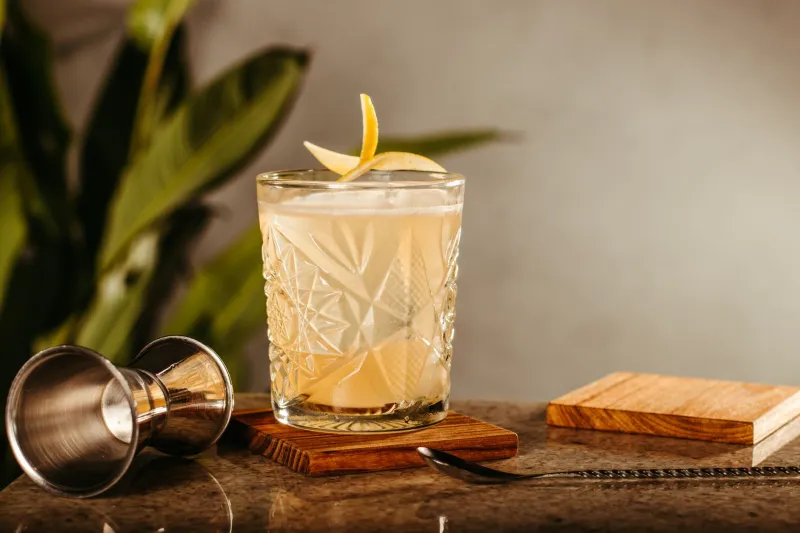
This is why expressing a citrus peel over a cocktail isn't just a bartender flourish — it's functional. When you bend a lemon or orange twist over the surface of a drink, you're rupturing tiny oil glands in the skin, releasing a fine mist of aromatic compounds that settle on the liquid and float above it. Take a sip right after, and the drink tastes brighter, more complex, more alive than it would without that step.
The same logic applies to fresh herbs. A slapped sprig of mint releases volatile oils that hit your nose with every sip. A torched sprig of rosemary doesn't just look dramatic — the smoke and char add a savory, almost resinous note that can make a gin or mezcal cocktail feel genuinely different.
Garnishes aren't decoration with a side of flavor. They're flavor delivery with a visual bonus.
Matching Garnishes to Spirit Families
Once you start thinking about garnishes as functional, the question becomes: what pairs with what? Here's a practical framework to get you started.
Whiskey (Bourbon, Rye, Scotch) Whiskey cocktails tend to be rich, warm, and spirit-forward. They pair beautifully with garnishes that either complement or cut through that weight. A wide orange twist expressed and draped over the glass is the classic move for an Old Fashioned or Manhattan — the oils amplify the fruity, caramel notes in the whiskey itself. For smokier Scotch drinks, a single cocktail cherry (go for Luxardo, not the neon jar variety) adds a syrupy contrast that works surprisingly well. Avoid anything too delicate or grassy; it'll get lost.
Gin Gin is the most garnish-friendly spirit in your arsenal, full stop. Its botanical backbone gives you a lot to work with. A cucumber ribbon pairs perfectly with London Dry gins and adds a clean, green freshness. Citrus twists — lemon especially — brighten floral or citrus-forward gins. Fresh herbs like thyme, basil, or tarragon can echo botanicals already present in the spirit. For a classic Negroni, the orange peel isn't optional; it's structural.
Tequila and Mezcal Agave spirits love earthy, smoky, and citrus-driven garnishes. A charred lime wheel on the rim of a mezcal sour looks stunning and reinforces the spirit's natural smokiness. Chili salt rims with a fresh jalapeño slice add heat that plays off tequila's vegetal edge. Fresh cilantro, while polarizing, is genuinely excellent in certain tequila highballs if your crowd is into it.
Vodka Because vodka is intentionally neutral, garnishes have more influence here than with almost any other spirit. They become the flavor story. A cucumber slice in a vodka soda does real work. Lemon or lime twists add the citrus note the spirit doesn't bring on its own. For dirty martinis, a good blue cheese–stuffed olive is less a garnish and more a co-star.
Rum Tropical drinks built on rum are natural homes for big, expressive garnishes — pineapple wedges, mint sprigs, dehydrated citrus wheels, even orchids if you want to go full tiki. But rum also shows up in stirred, spirit-forward cocktails where restraint is the move. A simple flamed orange peel on a rum old fashioned is elegant and effective without being showy.
A Few Techniques Worth Learning
Knowing what to use is half the battle. Knowing how to use it closes the gap.
The Express and Discard vs. Express and Drape For some cocktails, you want to express a peel over the glass, wipe it around the rim, and then discard it — the oils are in the drink, the visual is clean. For others (like an Old Fashioned), you express it and then drape it over the ice or rest it on the rim as a visual cue. Both are valid; the choice depends on how prominent you want the citrus presence to be.
Slapping Herbs Don't just place a mint sprig in a glass — give it a firm slap between your palms first. This bruises the leaves just enough to release their oils without turning them into a green mush. Same principle applies to basil, sage, and rosemary.
Toasting and Torching A kitchen torch is a surprisingly useful bar tool. Running a flame over a rosemary sprig for two or three seconds before dropping it into a cocktail transforms it from a herb into something almost incense-like. A flamed orange peel — holding the peel skin-side down, briefly passing a flame over it, then squeezing it so the oils ignite as they spray — is a showstopper that also genuinely enhances the drink.
Dehydrated Citrus If you want a garnish that looks polished and keeps well, dehydrated citrus wheels are your best friend. Slice lemons, limes, or oranges thin, arrange them on a wire rack, and dry them in the oven at around 200°F for two to three hours. They'll keep for weeks in an airtight container and add a concentrated citrus aroma without the juice.
Stock Your Garnish Station Like You Mean It
You don't need to go overboard, but a small, intentional garnish setup makes a real difference. Keep fresh citrus on hand always — lemons, limes, and oranges cover most of your bases. A jar of quality cocktail cherries (again, Luxardo or similar) earns its shelf space. Fresh mint is cheap and grows easily on a windowsill. Cocktail picks, a channel knife for making long twists, and a small Y-peeler for wide peel rounds out the kit.
Beyond that, let your regular cocktail rotation guide you. If you're making a lot of gin drinks, keep fresh cucumber in the fridge. If you're into mezcal, a small jar of chili salt on the counter pays dividends. Build the station around what you actually pour.
The Signature Brushstroke
Here's the thing about garnishing: it's the moment where your cocktail stops being a recipe and starts being yours. Anyone can follow a Manhattan spec. Not everyone takes the time to find a beautiful wide orange peel, express it properly, and rest it just so against the edge of a coupe glass.
That extra thirty seconds is what your guests remember. It's what makes someone say, "I don't know what it is, but cocktails just taste better here." They're not imagining it. You've been setting the stage before they even take their first sip — and that's exactly the kind of detail that separates a good home bar from a great one.