The Hidden Reason Your Cocktails Taste Dull (Hint: It Has Nothing to Do With Your Booze)
You bought the good gin. You squeezed fresh lime. You followed the recipe down to the quarter-ounce. And yet — something's still off. The drink tastes flat, a little muddy, like it's missing that snap you get at a great cocktail bar.
Here's the thing most home bartenders never hear: the problem probably isn't your spirits, your technique, or even your ice. It's your acid balance. And once you understand what that means, you'll have a genuinely new lever to pull every single time you build a drink.
What Acid Balance Actually Means
Every cocktail sits somewhere on the pH scale — that 0-to-14 spectrum that measures acidity versus alkalinity. Pure water lands at 7 (neutral). Fresh lemon juice hovers around 2 to 2.5. Most well-balanced cocktails aim for somewhere in the 3 to 4 range, which is where your palate registers brightness, vibrancy, and that satisfying lift that makes you want another sip.
When a drink falls outside that sweet spot — either too acidic or not acidic enough — it doesn't just taste "wrong" in some vague way. Too little acid and the drink feels heavy, sweet, and one-dimensional. Too much and it's sharp, harsh, almost aggressive. The goal is a balance that makes everything else in the glass sing: the spirit's character, the sweetness of the syrup, the aromatics from the garnish.
Professional bartenders have been quietly dialing in this balance for years. Now it's your turn.
Why Fresh Citrus Isn't Always the Answer
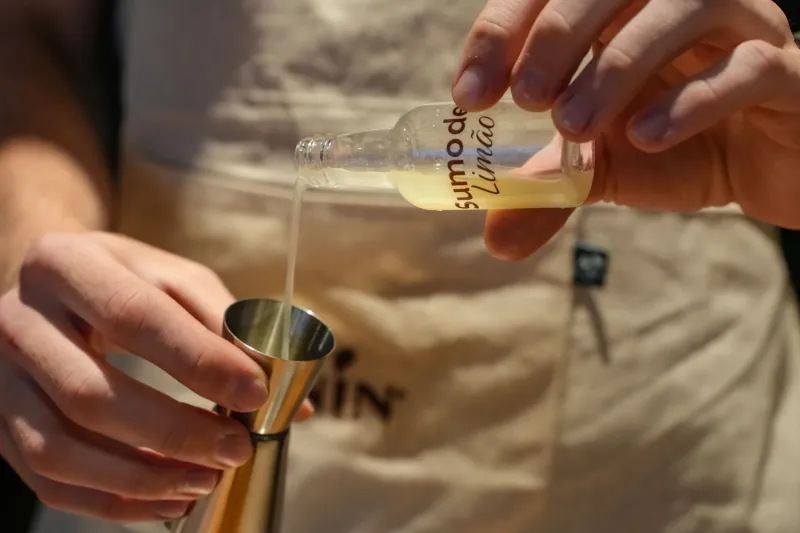
The instinct is to reach for a lemon or lime and call it a day. Fresh citrus is great — but it's also wildly inconsistent. A lime in January tastes completely different from one in August. The juice from a lime you grabbed at the corner store might have a pH of 2.2, while the bag of limes from the farmers market could clock in at 2.8. That seemingly small difference adds up fast when you're scaling recipes or trying to replicate a drink you made last week.
This inconsistency is exactly why top bartenders don't just squeeze and hope. They measure, taste, and sometimes swap out fresh juice entirely for more controllable acid sources.
The Professional Toolkit: Acid Adjusting
Acid adjusting sounds intimidating, but the concept is straightforward: instead of relying solely on the natural acid content of whatever citrus you happen to have, you use a precise, consistent acid source to hit your target flavor every time.
Here are the main tools serious home bartenders are starting to incorporate:
Citric Acid Solution
Citric acid powder — the same stuff that gives lemons their punch — dissolves easily in water and lets you add measured acidity without adding volume or flavor baggage. A common starting point is a 10% solution: 10 grams of citric acid dissolved in 90 grams of water. From there, you can add a few drops or a small measured pour to any drink that needs a lift.
This is especially useful in drinks where you want citrus brightness without the actual citrus flavor — think certain whiskey cocktails or anything where lemon or lime would compete with delicate spirits.
Malic and Tartaric Acid
Citric isn't the only acid worth knowing. Malic acid (the primary acid in apples and green grapes) gives a softer, rounder sourness. Tartaric acid (the backbone of wine) adds a drier, more structured edge. Blending these with citric can help you mimic the complexity of fresh fruit without the variability. Some bartenders use a blend of all three to create a "house sour mix" that stays consistent batch to batch.
Phosphoric Acid Drops
This one surprises people. Phosphoric acid — yes, the same acid that gives cola its distinctive bite — is increasingly showing up behind craft cocktail bars in the US. It delivers acidity without any fruity or citrus flavor, making it ideal for drinks where you want tartness to be felt rather than tasted. A few drops into a spirit-forward cocktail can add structure and length to the finish without announcing itself. You can find food-grade phosphoric acid online or through homebrew supply shops.
Vinegar and Shrubs
Acetic acid — the acid in vinegar — operates differently than citric or malic. It's more volatile, meaning it hits your nose before your tongue. That's why a well-made shrub (a vinegar-based drinking syrup) adds such a complex, layered sourness. Apple cider vinegar, champagne vinegar, and rice wine vinegar each have distinct flavor profiles worth exploring. If you've already started making shrubs at home, you're already doing acid work — you just might not have called it that.
How to Start Tasting for Acid Balance
You don't need a pH meter to get started, though one is a worthwhile investment if you get serious about this (decent options run $15 to $30 on Amazon). For now, train your palate with these steps:
Make a control drink. Pick a simple sour — a whiskey sour, a daiquiri, a gimlet. Make it exactly by the recipe. Taste it carefully. Notice where it feels flat or where it bites.
Add acid incrementally. Mix a small citric acid solution (10 grams citric acid, 90 grams water). Add it to your drink in small doses — start with two or three drops — and taste after each addition. You're not looking for a sour flavor; you're looking for the moment the drink suddenly tastes more alive, more complete.
Compare fresh versus adjusted. Make two versions of the same drink: one with fresh lime juice, one with a measured citric solution calibrated to match. Taste them side by side. The difference will teach you more in five minutes than any recipe can.
Keep notes. When you nail a balance that works, write down your ratios. This is how you build a personal playbook for your home bar.
A Quick Word on Sweetness and Balance
Acid and sugar are in constant conversation in a cocktail. Sweetness softens the perception of acidity; acidity cuts through sweetness. If you add more acid and the drink suddenly tastes too tart, the fix might be a small addition of simple syrup rather than backing off the acid. Think of it like seasoning food — sometimes you need both salt and acid together to make a dish pop.
The same principle applies here. Taste in pairs. Adjust in small increments. Let your palate lead.
The Payoff
Once you start thinking about acid balance, you'll hear it in every drink you taste — at bars, at restaurants, at friends' houses. You'll recognize that snap of a well-balanced margarita versus the flat, sweet version that's all triple sec and no lift. You'll know why that last cocktail you ordered at a great bar tasted so effortlessly complete.
And more importantly, you'll know how to get there yourself. That's what separates a home bartender who follows recipes from one who truly understands what's in the glass. Acid balance is the missing variable — and now it's yours to use.