The One Homemade Ingredient That Instantly Separates Serious Home Bars From Amateur Hour
There's a moment at every great home bar — you know the one. The host pulls something out of the fridge, measures a splash into a shaker, and the whole room perks up. What is that? Where did you get it? The answer, more often than not, is: they made it themselves.
Simple syrups are practically table stakes at this point. If you've spent any time reading about home bartending, you've probably made a basic 1:1 sugar syrup, maybe a honey syrup, maybe even a lavender or jalapeño variation. Good for you — those are genuinely useful. But cordials? That's where things get interesting.
A homemade cordial is the kind of thing that sounds intimidating but is actually one of the most accessible techniques in a home bartender's toolkit. And once you've made your first batch, you'll wonder how your bar ever got along without one.
Cordial vs. Syrup: Why It Actually Matters
People use these words interchangeably all the time, and honestly, the distinction gets blurry depending on who you ask. But for practical home bar purposes, here's a useful way to think about it.
A simple syrup is a sweetener with some added flavor — it's mostly sugar dissolved in water, with botanical or fruit character layered in. A cordial goes deeper. It's a concentrated flavor base where the primary ingredient (usually citrus, herbs, or botanicals) is the star, and sugar plays a supporting role in preservation and balance rather than just sweetness. Cordials typically have a higher acid content, a more intense flavor profile, and a longer shelf life than most fresh syrups.
The practical upshot: a tablespoon of a well-made cordial delivers more complexity than two tablespoons of flavored syrup. You're working with something closer to a flavor concentrate than a sweetener, which means you have more control over how each drink comes together.
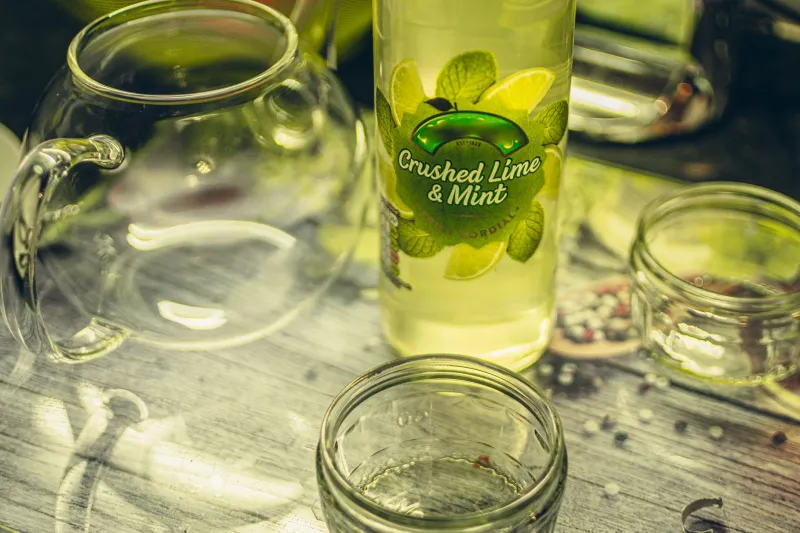
Commercially, you've probably seen Rose's Lime Cordial on the shelf — that's the classic reference point, even if the bottled version is a bit of a pale shadow of what you can make at home. Elderflower cordials like St-Germain are technically liqueurs (because they include alcohol), but the homemade non-alcoholic version is what we're talking about here, and it's genuinely special.
Why Your Home Bar Needs One
Here's the honest pitch: making a house cordial immediately signals that your home bar is operated by someone who actually thinks about what they're doing. It's a small investment — maybe 45 minutes of hands-on time and a few dollars in ingredients — that pays dividends across an entire season of entertaining.
One batch of lime cordial, for instance, can go into a gimlet, a Southside, a sparkling limeade for non-drinkers, a tequila sour, a daiquiri variation, or a simple highball with gin and soda. That's a single recipe anchoring half a dozen drinks without you touching a fresh lime. Elderflower cordial is equally versatile — it plays beautifully with gin, vodka, prosecco, and even whiskey if you're feeling adventurous.
There's also a shelf-life advantage. Because cordials are high in both sugar and acid, they keep well in the refrigerator for two to four weeks without any special equipment. Make a batch on a Sunday afternoon, and you're set for the next several dinner parties.
The Foundation Recipe: Lime Cordial
This is the one to start with. It's straightforward, the ingredients are cheap and widely available, and the result is genuinely better than anything you'll find in a bottle at the grocery store.
What you'll need:
- 1 cup fresh lime juice (about 8–10 limes)
- Zest of 4 limes (use a microplane, not a box grater)
- 1 cup granulated white sugar
- ½ cup water
- Pinch of salt
The process:
Start by zesting your limes before you juice them — it's much easier that way, and you'll thank yourself. Combine the zest, sugar, and water in a small saucepan over medium heat. Stir until the sugar fully dissolves, then pull it off the heat immediately. You're not looking for a boil here — just enough heat to dissolve the sugar and coax the oils out of that zest.
Let the syrup steep for 20 to 30 minutes off the heat. The longer you let it sit, the more pronounced the lime character will be. Then strain out the zest through a fine mesh strainer, pressing gently to extract every last bit of flavor.
Finally, stir in your fresh lime juice and the pinch of salt. That salt is not optional — it rounds out the acidity and makes the whole thing taste more alive. Pour into a clean glass bottle or jar, seal it, and refrigerate. It'll keep for up to three weeks.
The result is bright, concentrated, and unmistakably lime — not the flat, slightly chemical taste of bottled cordial, but something that actually tastes like the fruit.
A Quick Word on Elderflower Cordial
If you want to try something a little more unexpected, elderflower cordial is worth the effort. You can find dried elderflowers at specialty grocery stores or online — Whole Foods often carries them, and they're easy to order through Amazon. The method is similar: make a simple syrup, steep the flowers for 30 minutes, strain, add lemon juice and a touch of citric acid (available at most homebrew or natural grocery stores) for preservation and brightness.
The flavor is floral and delicate in a way that's hard to describe until you've tasted it. A splash in a gin and tonic completely transforms the drink. Mixed with prosecco and a squeeze of lemon, it's one of the most crowd-pleasing aperitifs you can put in front of guests.
How to Use Your Cordial Like a Pro
Once you've got a batch in the fridge, the instinct is to reach for it constantly — and you should. But a few principles will help you use it well.
Start with less than you think you need. Cordials are concentrated, and it's easy to over-sweeten a drink. In most recipes, you're looking at ½ to ¾ ounce as a starting point, then adjusting from there. Taste as you go.
Balance your acidity. Because your cordial already contains citrus juice, you may not need as much fresh citrus in a given recipe. Pay attention to how tart the drink tastes before you add more lemon or lime.
Tell people what's in it. Seriously — when you hand someone a drink and mention casually that the cordial is homemade, it changes the experience. Not in a braggy way, just in a "this person cares about what they're doing" way. That's the whole point of building a thoughtful home bar.
The Bigger Picture
Learning to make a house cordial isn't about adding complexity for its own sake. It's about having one more tool that gives you genuine flexibility — a flavor anchor you made yourself, calibrated to your taste, ready to go whenever someone walks through the door.
Syrups are useful. Bitters are essential. But a cordial? That's how you start turning good drinks into ones people actually talk about on the drive home. And it takes less than an hour. There's really no reason not to.